 Guest Writer
By Roxana Abid, Guest Writer
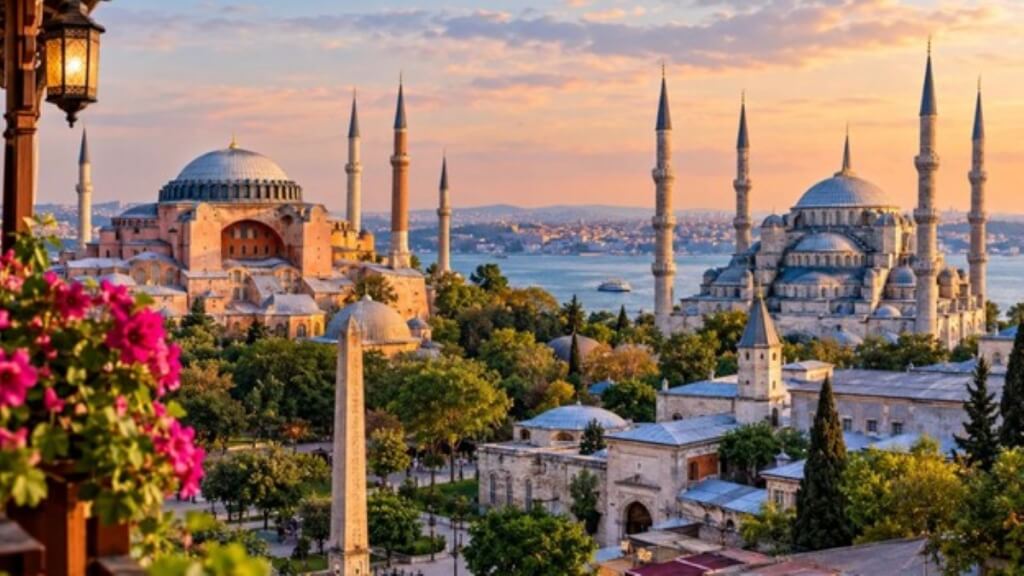
Istanbul’s Old City packs more history into a few walkable streets than almost anywhere else in the world. Within a ten-minute stroll you can pass a Byzantine cathedral, an Ottoman imperial mosque, a sultan’s palace and two historic markets.
This district, known as Sultanahmet, sits on a peninsula and is easy to cover on foot. That makes it ideal for a single, well-planned day.
This itinerary is built from official visitor information, news reports and traveler accounts. It follows a logical route, so you spend your time seeing the sights rather than crossing the city.
Table of Contents
- Getting Around the Old City
- Morning (about 9:00 to 12:00): Hagia Sophia and the Blue Mosque
- Midday (about 12:30 to 3:30): Topkapi Palace and Lunch
- Afternoon (about 4:00 to 6:30): Grand Bazaar and Spice Bazaar
- Practical Tips
- Conclusion
Getting Around the Old City
Sultanahmet is compact, and most of the main sights are within walking distance of each other. Most visitors arrive by tram, since the T1 line runs right through the district. The Sultanahmet stop is right beside the two big mosques, while the Gülhane stop is closer to Topkapi Palace.
Wear comfortable shoes. The streets are cobbled and uneven, and you will walk several kilometres over the day.
Start early. The major sights draw their longest queues from mid-morning, and an early start gives you quieter courtyards and softer light.
Morning (about 9:00 to 12:00): Hagia Sophia and the Blue Mosque
Hagia Sophia
Begin at Hagia Sophia. Built in the sixth century as a Byzantine cathedral, it later became a mosque under the Ottomans. It served as a museum from 1935 and has been a working mosque again since 2020.
Together with the other landmarks of the old peninsula, it carries a World Heritage listing from UNESCO. Look for the vast central dome, the Byzantine mosaics and the Islamic calligraphic roundels added over the centuries.
The building is in the middle of a long restoration project, including reinforcement work on the dome. Parts of the interior or exterior may be covered by scaffolding, so the view may differ from older photos. The upper gallery, which was closed for some time, has been reopened to visitors.
Since the building is a working mosque, opening times shift around the daily prayers. Worshippers use the main hall downstairs, and sightseers follow a separate route up to the gallery.
Foreign visitors pay a separate ticket (around €25 at the time of writing) to enter the upper gallery, where the Byzantine mosaics are. Children under eight are free with an adult, and visitors use a dedicated tourist entrance. Prices and rules change, so check the current information before you go.
If you want more background, the Hagia Sophia History and Experience Museum on Sultanahmet Square is a separate, paid museum that tells the building’s story. It opened in 2023, and you can skip it if you are short on time.
The Blue Mosque
Across the park stands the Sultan Ahmed Mosque, better known as the Blue Mosque. It is named for the thousands of blue İznik tiles inside, and it is one of the few mosques in Türkiye with six minarets.
A long restoration finished in 2023, and the mosque is open to visitors again. Entry is free at the time of writing.
It is an active place of worship, and visits pause around each of the five daily prayers, so plan around them. Dress modestly, with shoulders and knees covered and, for women, a headscarf. You will take your shoes off at the entrance.
The Hippodrome
Just outside the Blue Mosque, the open space of the old Hippodrome is worth a short pause. The Obelisk of Theodosius, brought from Egypt, still stands there.
Midday (about 12:30 to 3:30): Topkapi Palace and Lunch
Walk toward Topkapi Palace, home to the Ottoman sultans for roughly four centuries. It is a series of courtyards and pavilions rather than a single building, so plan for two to four hours.
Highlights include the Imperial Treasury and the Harem, the private quarters of the sultan’s family. Its garden terraces open out to sweeping water views in several directions.
The palace is closed on Tuesdays, so plan your day around that. If you visit on a Tuesday, swap the palace for the Basilica Cistern and a longer walk around the Hippodrome area.
Ticket arrangements for the Harem have changed in recent years. Some guides list it as part of a combined ticket and others as an add-on, so check the official ticket page before you go.
For a deeper look at tickets, routes and what to see inside, see this first-time visitor’s guide to Topkapi Palace.
For lunch, skip the restaurants right outside the main gates, which tend to be pricier and more tourist-focused. Walk a few streets away into the side lanes of Sultanahmet instead.
Small restaurants there serve everyday Turkish food. Look for lentil soup, grilled köfte or a plate of pide, and finish with a glass of Turkish tea. Eating a few blocks from the crowds usually means better value.
Afternoon (about 4:00 to 6:30): Grand Bazaar and Spice Bazaar
The Grand Bazaar
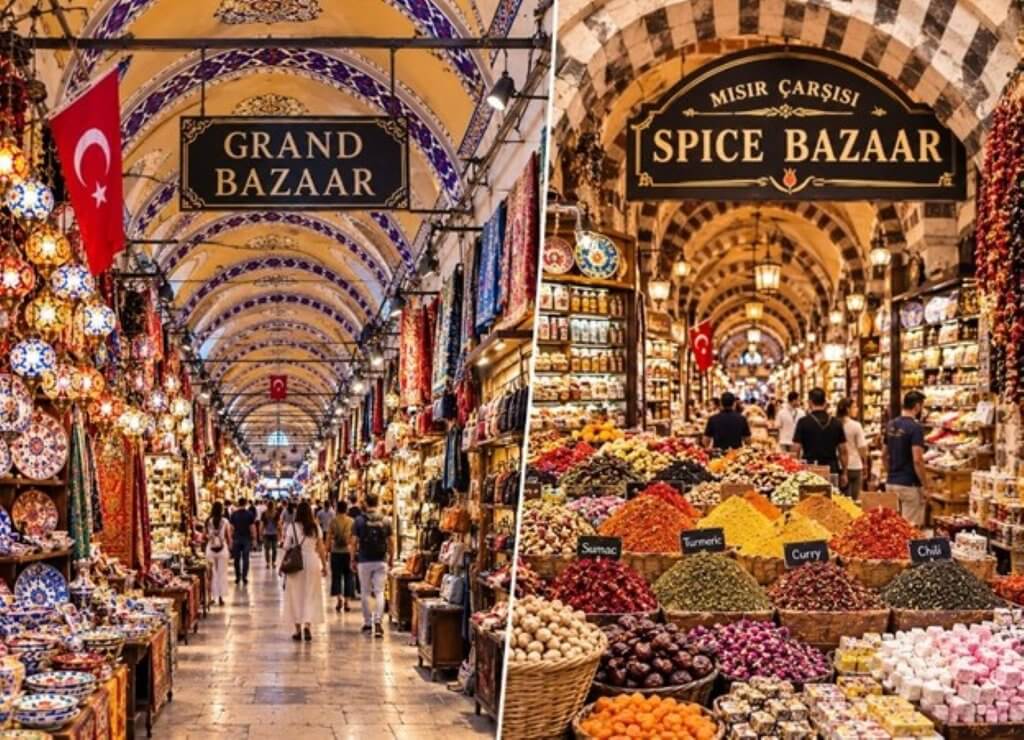
After lunch, head to the Grand Bazaar, one of the largest and oldest covered markets in the world. Its maze of vaulted corridors holds thousands of shops selling ceramics, lamps, textiles, leather goods and jewellery. Entry is free.
Do not try to see everything. Pick a few lanes, wander slowly and let yourself get a little lost.
Bargaining is part of the experience, so stay polite and be ready to walk away. The Grand Bazaar is closed on Sundays and may also close on public holidays.
The Spice Bazaar
Finish at the Spice Bazaar (Egyptian Bazaar), which is smaller, more fragrant and easier to navigate. Stalls here stack pyramids of spices, dried fruits, nuts, teas and Turkish delight, making it the best place for edible souvenirs.
It is usually open on Sundays, which makes it a good fallback if you are visiting on that day. Check current hours before you go.
If you still have energy, the walk down toward the Galata Bridge and the waterfront is a pleasant way to end the day.
Practical Tips
Tickets and timings: Opening hours, closing days and prices change, so check each site’s official page before you go rather than relying on older guides.
What to wear: Modest clothing for mosques, comfortable walking shoes, and a light scarf for women.
Best time to visit: Spring and autumn offer mild weather. Summer can be hot and crowded, so start at opening time.
Money: Carry some cash for small shops and tips, but cards are widely accepted in larger places.
Stay flexible: Prayer times can close mosques temporarily, so keep the order of your sights flexible.
Friday tip: Mosque visits are limited around the midday prayer, so on a Friday, see Hagia Sophia in the morning and head to Topkapi Palace around midday.
Conclusion
The Old City rewards a slow, well-planned day. In one day you can move from Hagia Sophia and the Blue Mosque to Topkapi Palace, and finish in the lively lanes of the Grand Bazaar and Spice Bazaar. Check opening days and prices before you go, leave room for prayer-time closures, and let yourself wander a little between the main sights. One day will not show you everything in Sultanahmet, but it gives you a clear and rewarding first look at Istanbul’s history.
About the Author
Roxana Abid runs Turkish Gaze, a blog of travel guides about Istanbul, Cappadocia, Antalya and other parts of Turkey. She writes extensively on local attractions, food trails, and Ottoman history from the cities where Europe and Asia meet.