 Guest Writer
By Anjana Devi, Guest Writer
Stand at the counter of any busy tiffin place in Chennai early in the morning and you’ll hear it before you see it. A server lifts a steel tumbler high and pours hot coffee into a small bowl below, then back again, in a long brown ribbon. Behind him, batter hisses as it hits a hot griddle and spreads into a dosa. Nobody is rushing, and nobody is waiting long either. I cook South Indian food at home every day, and this is still the breakfast I’d happily plan a trip around.
Most visitors to Chennai eat in their hotel and never see this side of the city. That’s a shame, because everyday food here is some of the best in India, and it’s easy to find once you know what to look for. This Chennai food guide follows a local day of eating, from breakfast and filter coffee to a banana leaf meal at lunch and snacks by the sea at sunset. It covers what to eat in Chennai, where to find it, and how to eat it the way people here do.
Morning, Tiffin, and Filter Coffee
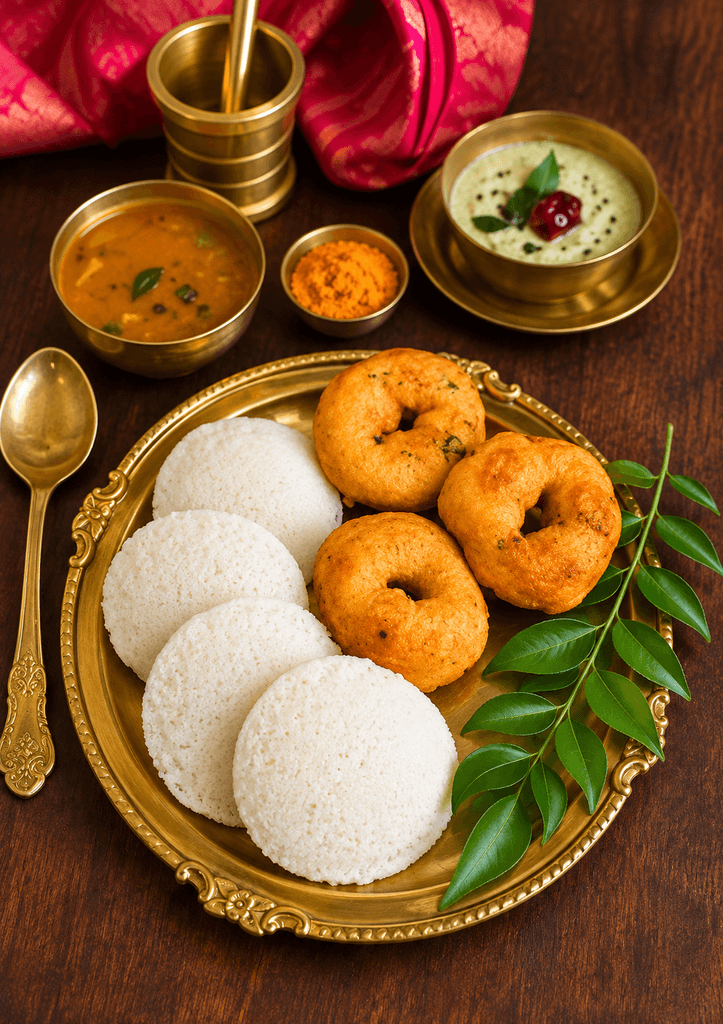
In Chennai, “tiffin” means a light meal, and breakfast is the most important tiffin of the day. A South Indian breakfast is built around a few staples, each served with coconut chutney and a bowl of sambar, a lentil and vegetable stew flavored with tamarind.
Idli are soft, steamed rice and lentil cakes, pale and spongy, made to soak up whatever you pour over them. Dosa is the same fermented batter spread thin and cooked until crisp and golden, often folded around spiced potato as a masala dosa. Vada are savory lentil doughnuts, crunchy outside and fluffy inside. Pongal is a soft mix of rice and lentils cooked with ghee, black pepper, cumin and cashews, the most comforting thing on the menu. Don’t be shy about mixing and matching. Most people order two or three things and share.
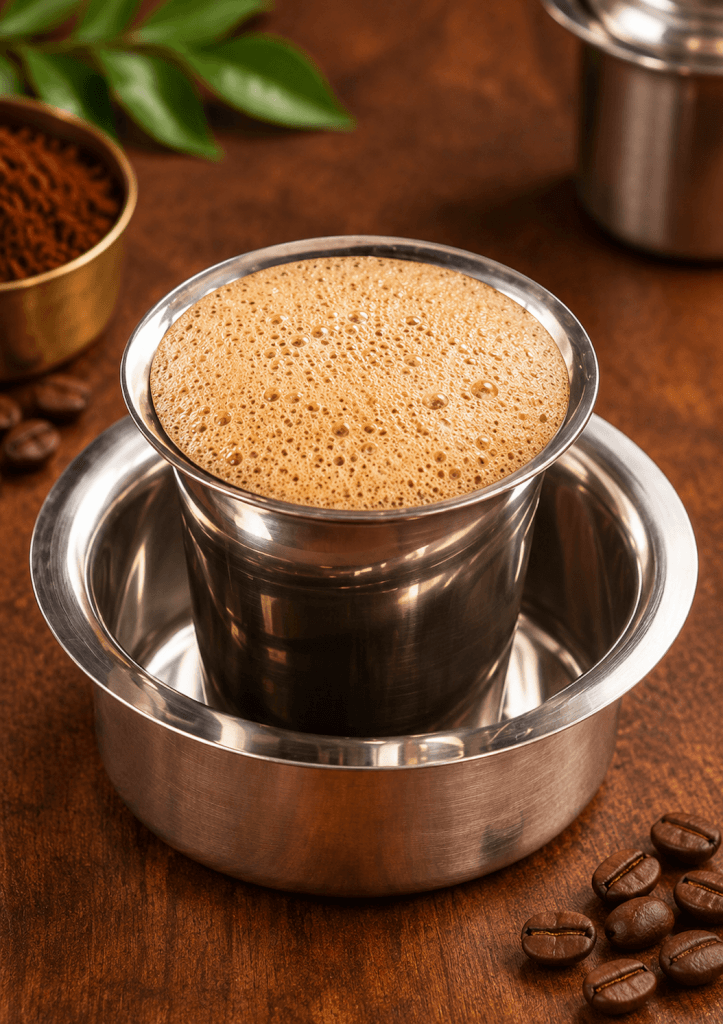
To drink, there’s only one choice. South Indian filter coffee is brewed slowly in a two-part metal filter, then mixed with hot milk and a little sugar. It’s served in a steel tumbler set inside a dabarah, a small bowl with a rim. The pouring back and forth cools the coffee and gives it a light froth. Locals hold the tumbler by its rim, because the sides get very hot.
For a classic start, go to Ratna Cafe in Triplicane, which has been serving tiffin since 1948. It’s best known for idli drowned in its own sambar, and many people order extra sambar on the side. In Mylapore, Rayar’s Mess is a small, old-school vegetarian place where a queue often forms by 7 a.m. for crisp vadai, rava dosa and pongal. It’s simple and crowded, and that’s part of the charm.
Afterwards, walk a few streets to the Kapaleeshwarar Temple and its busy lanes, which makes for an easy half-day in Mylapore.
If you’re staying in the south of the city, VB World by Vasanta Bhavan in Velachery, or any of the other Vasanta Bhavan branches, is a reliable stop for traditional tiffin and a strong filter coffee.
Lunch, The Banana Leaf “Meals”
Lunch in Chennai is the main meal of the day, and the dish to look for is simply called “meals.” It isn’t a single dish. It’s a whole spread served on a fresh banana leaf, with small portions of many things around a mound of rice.
A typical vegetarian meal includes sambar, rasam (a thin, peppery tamarind broth), kootu (vegetables cooked with lentils and coconut), poriyal (a dry vegetable stir-fry), curd, crisp papad, a spoonful of pickle and a sweet payasam to finish. Servers walk the rows with steel buckets and refill your leaf as you go, so the meal keeps coming until you tell them to stop.
There’s a rough order to eating it. Start with rice and sambar, then move to rice with rasam, which many people sip as well. Finish with rice and curd, which cools everything down after the spice. The vegetables, pickle and papad are eaten alongside at any point, and the payasam can come at the end or in between.
For a vegetarian banana leaf meal, try Nithya Amirtham, which has several branches across the city, including one in Nungambakkam. It’s a good introduction for first timers, with the leaf refilled as you eat.
Chennai also has a rich non-vegetarian tradition, much of it from the Chettinad region of Tamil Nadu, known for bold, peppery spice blends. At Chettinad Canteen in Teynampet, the meals come as a set 5-course or 7-course meal.
If you have room for one more lunch, look for an Ambur Star Biryani branch. Ambur-style biryani is lighter and less oily than many versions, made with short-grain rice and tender meat. It’s served on a banana leaf with dalcha, a lentil curry, and a cooling onion raita.
Evening, Snacks, and Sweets

As the afternoon heat fades, much of the city heads to the beach. Marina Beach and Besant Nagar, also known as Elliot’s Beach, both fill up at sunset with families, walkers and rows of snack stalls.
Look for sundal, warm chickpeas tossed with coconut, mustard seeds and curry leaves, served in a paper cone. Bajji are fritters made by dipping slices of banana, onion or chili in spiced gram flour batter and frying them until puffed and crisp. Eat them hot, straight from the oil. You’ll also find corn roasted over coals and rubbed with lime and chili.
To take something home, stop at a sweet shop for a box of murukku, crunchy spirals made from rice flour, or try Mysore pak, a rich, crumbly fudge made from gram flour, sugar and a generous amount of ghee. It’s very sweet, so a small piece goes a long way.
How to Eat Like A Local
A few simple habits will make you feel at home at any Chennai table.
- Wash your hands before and after eating. Most places have a sink near the entrance.
- Eat with your right hand. Using your fingers to mix rice with sambar is how the food is meant to be eaten, but asking for a spoon is always fine.
- Refills are normal. When you’ve had enough, say so, or cover your leaf with your hand when a server comes by.
- When you’ve finished a banana leaf meal, fold the leaf in half towards you. It’s a quiet way of saying you enjoyed the food.
Don’t worry about getting every detail right. Servers in Chennai are used to visitors, so a smile and a “thank you” go a long way.
Practical Notes
The best time to visit is in the cooler months, roughly November to February. The rest of the year can be very hot and humid.
Breakfast places are busiest early in the morning, so arrive in good time for the most popular ones. Most “meals” restaurants serve lunch only, roughly from midday to mid-afternoon, so check each place before you go.
Chennai is one of the easiest cities in India for vegetarians, though there’s plenty for meat eaters too. To get around, use autorickshaws, app-based cabs or the Chennai Metro, which links many central neighborhoods.
If you fall for these flavors, you can recreate many of them at home with these South Indian recipes.
About the Author
Anjana Devi lives in India, where she cooks South Indian food at home every day, and never says no to a second filter coffee. She writes for HomeCookingShow.in, sharing everyday Indian home cooking for families in India and around the world.