Gourmet Flyer
 A visit to Taipei will give you a multifaceted experience, including an immersion into its rich history and culture, delightful explorations of its natural landscapes, and exciting foodie adventures into the World’s most famous and vibrant night markets. While it is one of the most modern cities in the World encompassing a major global high-tech hub, many charming and rustic villages are only a short train ride away. To make your visit even more enjoyable, this capital city of Taiwan has an extensive network of subway, high-speed trains, and other public transportation that can take you to almost every major attraction.
If you are a first-time visitor, the following list of the best things to do and places to see in Taipei will be a great starting point for you. Even for repeat visitors, this list can give you a quick review of what you might have missed or not even aware of in your previous trips.
Table of Contents
- Iconic Attractions in Taipei
- Outdoor Adventures in Taipei
- Historical or Cultural Explorations in Taipei
- Foodies’ Paradise in Taipei
- Epic Day Trips from Taipei
- Conclusion
Iconic Attractions in Taipei
Taipei 101

Just like the Willis Tower (Sears Tower) in Chicago, the Empire State Building in New York, or the Eiffel Tower in Paris, Taipei 101 is one of those iconic buildings that offers a top-of-the-world experience that most visitors will enjoy immensely. Your adventure starts with a super-fast elevator that takes you to the 89th floor observation deck in 37 seconds. That is an average speed of over 27 meters per second or about 60 miles per hour.

Once you are up there, there are plenty of large panels of floor-to-ceiling windows that let you enjoy the panoramic view of the city. There are also many photo spots with romantic backdrops as well as infinite mirrors for you to snap that Instagram-worthy picture. While you are there, check out the Tuned Mass Damper (TMD) technology that counters the sway of the building caused by earthquakes or strong winds. Weather permitting, also remember to explore the open-air deck called Skyline 460 on the 101st floor (separate ticket required.)
Ximending

This is a trendy, hip, and vibrant shopping, dining, and entertainment center of Taipei. Here you’ll find anything from stylish fashion to conventional sportswear, the hottest collectibles to traditional souvenirs, a robust food scene offering both innovative cuisines and homemade comfort food, and a lively night life that extends to the wee hours of the morning. For a complete guide to exploring the district, please see my recent blog post:
Lantern Festival

There are several lantern festivals in the city during Chinese New Year and this particular one in Ximending has been one of the largest, spanning four theme zones along Zhonghua Road. This is also one of the most popular in recent years. Arrays of colorful and lovely lanterns are displayed along a pedestrian bridge, highlighting the festive atmosphere of the new year.
The other type of lantern festival, commonly known as sky lantern festival, involve sending the lanterns up to the sky en masse in a choreographed fashion. This is one of the most exciting events of the year and is typically held during Chinese New Year. For more information, please my blog post:
Pingxi Sky Lantern Festival – A Comprehensive Guide
Longshan Temple

Longshan is an iconic old temple built during the Qing dynasty and is considered one of the greatest cultural and historical monuments of Taiwan. It is an active place of worship; chanting ceremonies and prayer services are held daily. Faiths that are celebrated include Taoist, Buddhist, and Confucian. Locals also come to pray for love and perform matchmaking” rituals. It is generally considered to be an architectural masterpiece, with imposing tall granite columns and meticulously hand-crafted dragons. At night, the place lights up to an enchanting atmosphere, highlighting its spiritual significance.
Access is easy – just take the MRT Blue Line to the station bearing the same name. There are plenty of fortune tellers, teahouse, and eateries in the area. Night markets are also within a short walk away.
Outdoor Adventures in Taipei
Maokong Gondola

To ride the gondola, take the MRT Brown Line to its terminal station, Taipei Zoo, then follow signs to a ten-minute walk to the cable car complex. The entire ride is about one and a quarter mile long with three small stations in between. Your ultimate destination is the final station, Maokong. The entire journey takes about 30 minutes, and it is a very scenic ride with spectacular views of the city, including many major landmarks.
Once you’ve reached Maokong, you are on the top of the world, so to speak. Most of the major attractions and eateries are to your right as you exit the station complex and face the main road. There are many hiking trails, most of them are punctuated with teahouses serving Taiwan’s famous local Oolong tea. Many of the teahouses have their own plantations and these are the perfect places to buy top quality tealeaves to take home. If you don’t want to venture too far and stay near the station, Sih Ye Teahouse (map) has a roof top restaurant that offers a panoramic view as well as delicious dim sum and stir-fried dishes at reasonable prices.
Elephant Mountain

This is one of the most scenic hikes that comes with a spectacular view of the city and there are several lookouts as well as many photo spots. However, note that this is a moderate level hike and requires good physical conditions due to the large number of stairs. The roundtrip journey takes about one and a half to two hours, depending on how many stops you make and how much time you spend on resting and taking pictures. The most challenging part of the hike is the 20 to 25-minute climb from the trailhead to Six Boulders, which are all uphill stairs, many of them rather steep. Hiking this trail during the hot summer months can be very strenuous so please wear a hat and sunscreen and bring plenty of water.
Access is easy – just take the MRT Red Line to its final station, Xiangshan (Elephant Mountain in Mandarin) and the trailhead is just a ten-minute walk from there. There are also convenience stores nearby if you need supplies or water. This journey is best paired with your visit to Taipei 101 as the two attractions are just one station apart from each other on the Red Line.
Yangmingshan National Park

Yangmingshan is a huge paradise spanning over 43 square miles. There are many hiking trails of various difficulty levels zigzagging through valleys, lakes, rivers, and waterfalls, offering breathtaking views of mother nature. Visitors also enjoy the park’s unique geological features and explore its volcanic footprints, such as the dormant Seven Star Volcano. When it’s time to relax, get yourself comfortable in the Beitou Hot Spring. Last but not the least, Yangmingshan is one of Taiwan’s most famous and popular cherry blossom sites in spring.
While Yangmingshan is definitely a nature-lover’s dream come true, getting there is quite complicated. You can rent a car to drive there but only on weekdays, as most roads are closed on weekends and holidays. The easiest public transportation is probably taking the 260 bus from Taipei Main Station. Another alternative is to take the MRT Red Line to Jiantan Station and transfer to the Red 30 or 208 bus. The bus ride takes about one and half hours.
Since the Yangmingshan area is so huge and spread out, consider taking a guided tour that takes care of all the transportation as well as the logistics of traveling between the many attractions within the park.
Historical or Cultural Explorations in Taipei
National Palace Museum

As the name probably implies, this is the official museum of Taiwan showcasing precious and historical collections of the Chinese royalties. While there are numerous items on display dating back many centuries in time, the main focus of the exhibits is on the more recent dynasties – from Song to Qing. Many of the historical treasures were relocated from Beijing during the Republic of China’s withdraw from the mainland and subsequent flight to the island now known as Taiwan.
Among the over 700,000 pieces of calligraphy, paintings, artifacts, and national treasures, the “three icons” are the Pork Belly Stone (shown above) carved in the Qing Dynasty with jasper, Jade Cabbage carved into the shape of a napa cabbage head from the Qing Dynasty, and the bronze Mao Gong Ding with meticulous inscriptions from the Zhou Dynasty.
Chiang Kai Shek Memorial Hall

This is a lot more than just a memorial for the once ruler of the island, but it is a compound that includes a museum, souvenir shops, and cafes. The first thing to do is to climb the 89 steps of stairs (symbolizing his age when he passed away) leading to the memorial hall (there is an elevator for those who are physically challenged). The hall itself is solemn, with a huge status of President Chiang accompanied by armed imperial guards. The wall has inscriptions on the themes of democracy, science, and reasoning.

One event not to be missed is the changing of the guards ceremony, held hourly on the hour from 9am to 5pm. It used to be held inside the memorial hall. But I think the huge crowd that it draws makes the space too crowded. The last time I was there, people were squeezed shoulder to shoulder to make enough room for the guards to move around. Now it has been moved to the main square near the base of the staircase. I think this is a much better arrangement.
The museum downstairs has plenty of memorabilia as well as documentations of history and events, accompanied by many photographs. If you are hungry while you are there, the café upstairs (not the small stalls downstairs) cooks up excellent beef noodle soups.
Liberty Square

Built in the 1970’s and spanning over 2.6 million square feet, the square is a major public space in Taipei. Its name signifies Taiwan’s transition from a one-party system to democracy. The most dominant landmark on the square is certainly the Chiang Kai Shek Memorial Hall (see above). One the two sides are two iconic buildings – the National Concert Hall and National Theater.

Not as well-known but definitely worth exploring is the garden surrounding the CKS Memorial Hall. Another little-known secret is that during springtime, this is a gorgeous site of cherry blossoms.
Museum of Contemporary Arts

Located inside an architectural landmark designated as a historical building dating back to the Japanese colonial era, this is Taiwan’s first museum dedicated to contemporary arts. Its main focus is on Taiwanese arts punctuated with a variety of other Asian exhibitions. As far as I know, this museum does not feature any Western art – which is fine to me, since you are in Taiwan, of course you should be exploring Taiwanese culture.
The majority of the exhibits are thought provoking, philosophical, and inspirational. They cover a wide spectrum of Taiwan, its people, their way of life, community, culture, and challenges. Contemporary art is almost like an acquired taste – not everybody’s cup of tea – but it invites an immersive experience. If you can appreciate that, you’ll gain a much deeper understanding of Taiwan and its people.
The Red House

The Red House is a historical landmark in the vibrant district of Ximending, just across from the MRT (subway) exit. It was built in 1908, during the Japanese colonial era. It was a local cultural and entertainment center which quickly became a melting pot of Japanese, Chinese, and Western cultures. In the 1940’s, during its glorious days as the Red House Theater, it was home to numerous Chinese operas and dramas. In the 1960’s it brought a taste to Western culture to the city by featuring American black and white movies. Through the years, it has become “the living room of the western district” where memories of the past meet the generations of the future.
Inside this historical building today is a café and a couple dozen shops selling trendy fashions, gifts, and gadgets. While this is no longer the Red House of the past, its architecture and history is still well preserved.
Foodies’ Paradise in Taipei
Ding Tai Fung

Ding Tai Fung now has restaurants in many major cities worldwide, so chances are you’ve probably seen or even dine in one in your area. But let me assure you that the quality of the DTF’s outside of Taiwan is at least a notch or two below what you’ll find in town here. So, even if you are a DTF regular, you should still give the local store a visit.
The original location in Xinyi Road in the Da’an District is a now take-out only spot. The main restaurant is the nearby Xinsheng branch (map) and is very popular among local and visitors alike. However, there are many other locations in the city and I have been to several and observed that the quality and standard are very uniform across the board. So just go to the one that is most convenient to you.
Ding Tai Fung is famous for its iconic xiao lung bao (XLB) with delicious fillings made with fresh meat and accompanied by a spoonful of soup wrapped in a thin and slightly chewy skin. So, this is a must order. There are also a variety of other dumplings that are worth trying. Noodles in chicken soup is another one of their signatures, where the soup is freshly made with no artificial flavors or MSG.
Night Markets

The night markets in Taiwan are the most lively, vibrant, and exciting destinations in Taipei that come alive when evening falls. The atmosphere is unbeatable, unlike anything that you’ll find in the Western World. They are always packed with tourists rubbing elbows with locals, and the vibes are energetic and super chill. Whether you want to grab some snack and finger foods or to get a full meal, your options are literally numerous.
However, you need to go there with an open mind and an adventurous appetite – yes, I know you are probably not into eating stinky tofu or pork intestines – but there are many other yummy good eats that you won’t want to miss. A few of my recommendations that are locally unique include pan-fried steamed bun, oyster omelet, pork pepper buns, and braised pork rice, just to name a few.
There are several dozen night markets in Taipei; the largest and the most popular ones are destinations by themselves and could take a few hours to explore. My recommendations are Shilin, Ningxia, and Raohe.
Beef Noodle Soup

While noodle soups are very popular throughout Asia, beef noodle soup is a classic comfort food that is almost iconic of the Taiwanese food scene. The broth has a distinctly intense flavor with plenty of spices like star anise, fennel seeds and cloves. A touch of Sichuan peppercorns adds a moderately bold kick to the flavor. The beef is usually sliced and marinated at least overnight for a rich taste, tender texture, and aromatic presentation.
Almost every noodle restaurant serves at least some variations of the beef noodle soup and almost everyone has their own personal favorites. Michelin also has its own list. But a general guideline is that the longer the line or the wait, the better it is. My personal favorite is Lao Shan Dong in Ximending (map).
Cooking Class
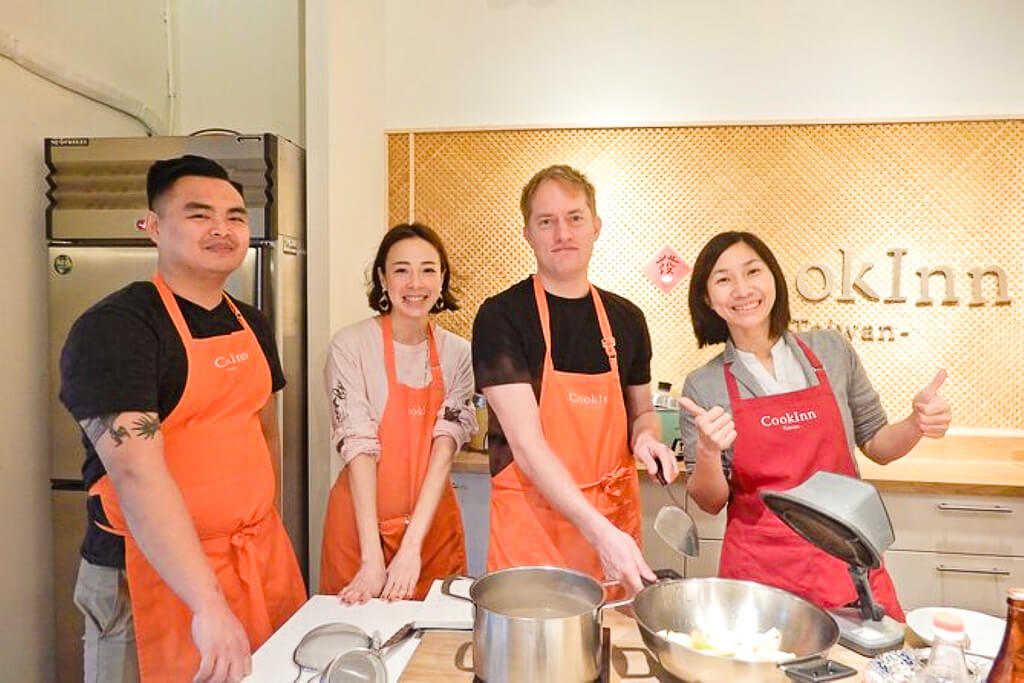
If you like Taiwanese food so much that you want to be able to make them at home yourself, then consider taking a Xiao Long Bao, Beef Noodles & Boba Tea Cooking Class. This three-hour adventure is highly immersive and teaches you all the techniques, including kneading dough from scratch. In addition to taking home all the recipes and memories, you’ll greatly enjoy this interactive cultural and culinary exploration. This is a small class suitable for all levels of cooking experience, and you will get plenty of personal attention from the instructor.
Steak on a Sizzling Platter

A classic Western fusion cuisine that is amazingly popular in Taiwan is steak – but presented on a cast iron sizzling plate. It is typically a very affordable dish popular among locals and is nowhere near a fancy steak dinner. Instead, it is almost a fast food or fast casual meal but packed with flavors. It you are like me and want to try what the average locals eat wherever I go then this is it!
The typical dish consists of a thin steak like top sirloin that is grilled and then placed on a super-hot (please be careful) sizzling platter, topped with either a raw or fried egg. A serving of black pepper or mushroom usually comes on the side so you can pour it onto the sizzling hot plate. Sometimes the sauce comes with the plate and its better because it won’t splatter onto your clothes. The meal usually includes rice, spaghetti, or vegetables. You options will vary depending on the restaurant.
There are many options in town. My personal favorites are Sun Dong Bao and Noble Family Steak House. These popular steak dishes, or some variations of them, are also widely available in most night markets.
Epic Day Trips from Taipei
Shifen and Pingxi Sky Lantern

Shifen Old Street is the major attraction where people purchase lanterns from the vendors there and release them on the railroad track. People typically write their wishes on the lantern, symbolizing sending their wishes to the heavenly gods. All the vendors are very professional and they will take pictures and videos for you and your family.
This is also a foodie’s playground with plenty of delicious local street food. You can smell the stinky tofu in the air and it is something that tastes a lot better than it smells. Be sure to grab some of the iconic soup dumplings known as xiao lung bao (XLB) and try both the steamed and pan-fried versions. There are also several gift stores selling locally made souvenirs. The most popular items are mini lanterns with blessings written on them.
The logistics of getting there involve long bus rides with train connections that can take up several hours of your time. I highly recommend joining a guided tour to get the best experience that also include Jiufen and Yehliu Geopark listed below.
Jiufen

To get from Shifen to Jiufen the easiest way is by taxi which takes about 30 – 40 minutes. You can also take the train but it involves connections and is also time consuming. Alternatively, as mentioned above, you can join a guided tour and forget about all the logistics.
Jiufen is a rustic and charming village that lights up at night like an enchanting movie scene. It is most famous for its teahouses. The most iconic one is A Mei (aka Ah Mui) pictured above, which serves a tea set complete with choices of snacks and desserts. There are many other surrounding teahouses in the area, some of them also offer spectacular views. Take time to stroll the narrow alleys with steep stairs and enjoy an experience that feels like travelling back in time. Don’t forget to visit some of the gift stores for some classic local souvenirs.
Yehliu Geopark

Yehliu Geopark is famous for its collection of geological but unique rock formations formed by centuries of natural erosions. Many of them have features that make them resemble real-life images. The most popular one is the iconic Queens Head pictured above, which took over 4,000 years to form. Similar formations nearby are the Cute Princess and Dragon Head. It’s really a site of geological studies turned into a major tourist attraction. The many types of rocks formed by evolution and erosion by the harsh sea and wind include mushroom, rocks, and honeycombed rocks.
To get there, it’s about a 90-minute bus ride on the number 1815/1815A route departing from the Taipei Main Station. However, to get to Shifen and Jiufen from there is extremely difficult without a car. Hence, I recommend taking the guided tour to explore all of the above places on the same day easily and comfortably.
Conclusion
This concludes our list of the most epic things to do while you are in Taipei, which covers a lot of cultural and historical explorations, an intimate experience with mother nature, exciting day trips to rustic destinations, and a renewed discovery of local cuisines. I eagerly hope that your visit will be filled with rewarding and fulfilling adventures, as well as plenty of yummy good eats!