 Guest Writer
By Haical Raza, Guest Writer
The first meal I remember on a Karakoram trail was not in a restaurant. It was bread, still warm from the pan, torn open and shared in a shepherd’s hut above 3,000 meters, with salted butter tea to wash it down. There was no menu, no choice, and no one asked what I wanted. That is how food works up here. It is whatever the season, the altitude and the household can provide — and after ten years of running treks through Gilgit-Baltistan, I have come to think that is the most honest way to eat in the mountains.
Gilgit-Baltistan sits in the far north of Pakistan, where the Karakoram, the Himalaya and the Hindu Kush meet. The valleys are steep, the growing season is short, and winter is long. Nothing about the food here is decorative. It is built to keep people warm and working at altitude: wheat and barley, dairy, dried fruit and nuts, and meat when there is meat to be had. If you arrive expecting the rich, fiery curries of the Pakistani lowlands, you will be surprised. Hunza cooking in particular is mild — low salt, minimal spice, almost no frying in the traditional repertoire. The flavor comes from the ingredients themselves: sun-dried apricots, walnut oil, fresh butter, and bread baked the same morning.
The Bread That Feeds The Trail
Bread is the centre of every meal here, and trekkers notice it before anything else. On the trail, bread is breakfast, lunch and the thing you carry in your pocket between villages.
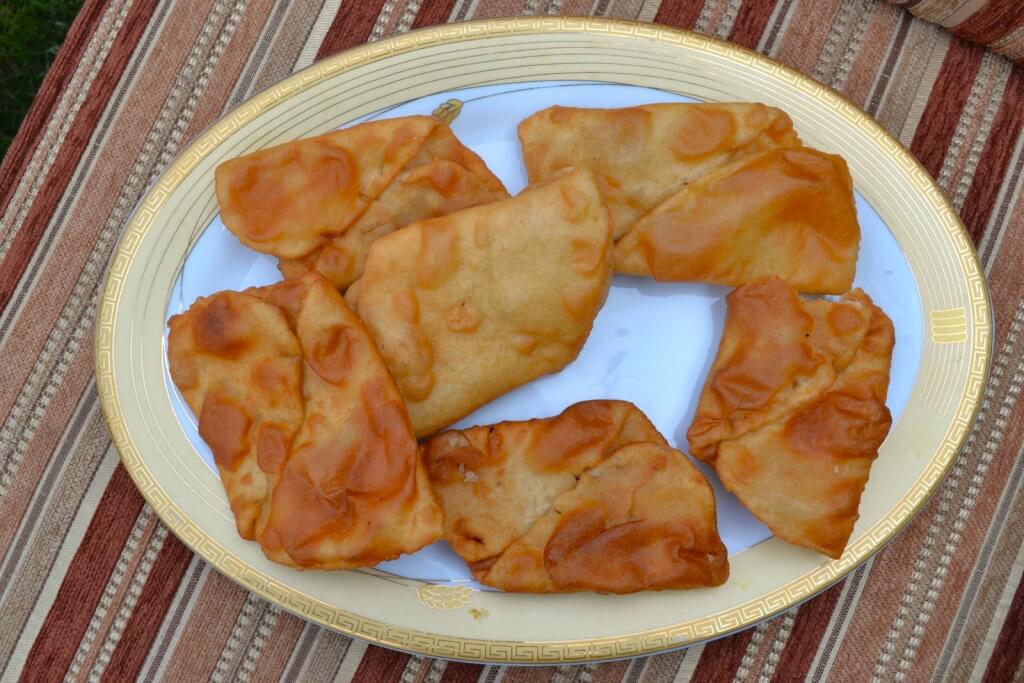
The dish to ask for first is chapshuro, sometimes spelled chapshoro. It is soft bread stuffed with spiced minced meat — chicken, beef, mutton, goat, occasionally yak — mixed with finely chopped onion, tomato, green chili, cumin and coriander, sealed like a pie and cooked on a heavy pan until golden. The name tells you what is inside: chap for meat, gunsho for onions, shoro for bread. It is often called the “Pizza of the North”, which is a fair description of the shape and a poor description of the taste. Eat it hot, straight off the pan, with raita or chutney. In Karimabad, the main town of Hunza, ask locally where it is being made fresh that day rather than assuming any one place serves it.
A typical trail breakfast is simpler: thick hearth bread with butter and tea. Phitti, also written fitti, is a thick bread with a crusty outside and a soft interior. Diram fitti, made from sprouted wheat flour, has a natural sweetness and is served with butter, honey or apricot oil. Gooli, also called giyaling, is a buckwheat or whole-wheat pancake bread, crisp outside and soft inside, often eaten at breakfast with apricot oil or butter tea. None of these is a side dish. On a cold morning at altitude, bread and butter is the meal.
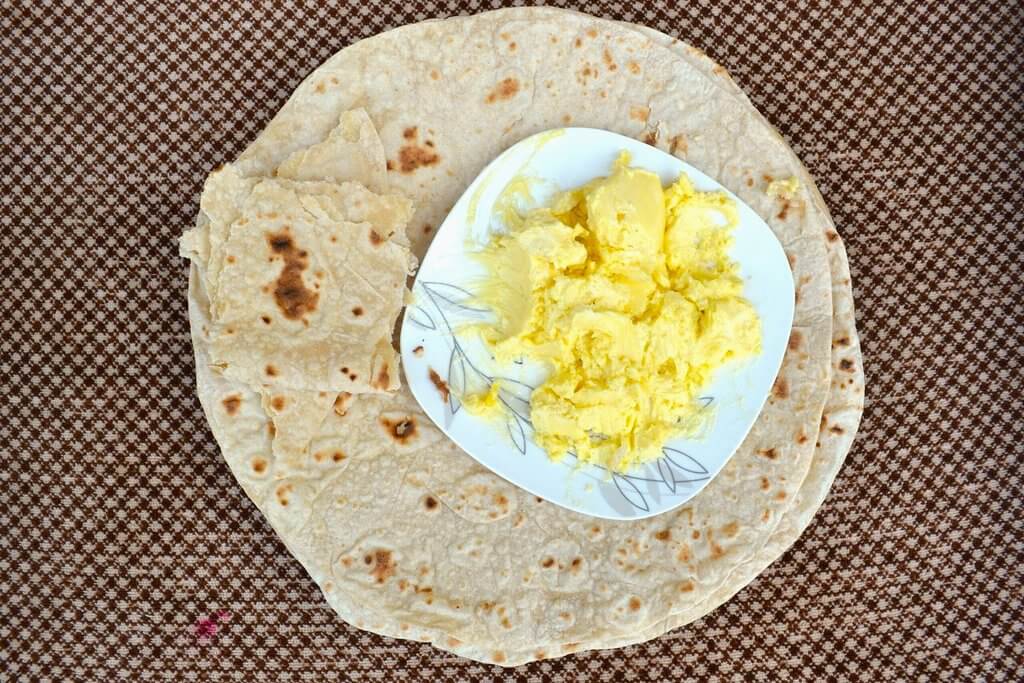
One breakfast worth knowing by name is brumhanik — bread and butter, offered to guests as a welcome. It looks plain on the plate. It is the closest thing to a handshake in Hunza food culture.
Dumplings, Soup and The Apricot That Never Leaves The Table
Mamtu are the other dish trekkers ask about, and they are worth the asking. Steamed dumplings filled with minced meat, onions and spices, served hot with chilli sauce, tangy yoghurt or a tomato sauce. They are lighter and softer than chapshuro, a good shared starter or a light lunch, and they carry Central Asian roots — the same dumpling tradition you find across the region’s old trade routes. In Gilgit city and Skardu town they are a street-food favourite and a celebratory dish. Recipes vary from cook to cook, and that is part of the point: mamtu is not a standardized product.
Then there is the apricot. If one ingredient runs through Hunza cooking, it is this. Fresh apricots ripen in summer; dried apricots carry the flavor through the long winter. In late summer, apricots are collected and dried in the sun on rooftops, walls and boulders, then stored for the cold months. The kernels taste similar to almonds and are eaten as a snack or used in cooking, and apricot oil pressed from the kernels is used for cooking — the sweet oil for the pan, the bitter oil for skin and hair, never confused.
The dish that best shows what apricots mean here is daudo, a dried-apricot soup with small wheat dumplings, a traditional winter dish. It is not a restaurant invention. It is what a household makes when the snow is on the ground and the fresh food is gone. Chamus, dried-apricot juice, is the drink that goes with it, and apricot cake and pie, made with dried-apricot purée, walnuts and wholegrain flour, is the version you will find in teahouses. In summer, eat the fresh fruit. In winter, the dried-apricot dishes are the authentic seasonal choice — and the honest one.
What to Drink, And What Not to Expect
Butter tea is the drink that divides first-time visitors. Also called po cha, or payu cha in Baltistan, it is tea leaves combined with milk and churned butter: salty, creamy, rich and warming. It is served to guests as a sign of hospitality and drunk with dry bread or diram fitti. Expect salt, not sugar. On a cold morning, it makes sense in a way no description quite captures.
Diltar is the local yoghurt drink — buttermilk or lassi, traditionally shaken in a skin until butter formed, now often yoghurt mixed with an equal amount of water. Sea-buckthorn is the third drink to look for, especially in Hunza, Gilgit and Skardu. The small orange berries are sold as juice, syrup, jam, dried berries and powder. The flavour is sharp, citrus-tart and tangy, so juice is often diluted or sweetened. Order it for the taste and because it is local, not because of any health claim you may have read. The food here is healthy by conventional measures, but the old stories about exceptional longevity do not have solid scientific backing, and no honest guide should repeat them as fact.
Trout is the region’s best-known fish and a welcome break from meat and bread. Rainbow trout is farmed in glacier water around Gilgit, and on menus it is commonly grilled or fried with rice, bread or vegetables. Look for it in Skardu town and Gilgit city, but ask on the day — availability can be seasonal, and at lakes, anglers should know that licences and local rules apply.
How to Eat Well onThe Trail
A few practical things, learned the hard way. First, expect mild food and ask for heat if you want it — chili sauce or chutney, rather than assuming a dish will arrive spicy. Second, ask what is fresh today. Many dishes are home-cooked or seasonal, so “What is fresh today?” will usually get you further than asking for a dish by name where it is not served. Third, do not expect a fixed menu in the villages. Menus change, kitchens close, and the best meal of a trek is often the one you did not plan — bread from a pan, soup from a pot, tea from a kettle that never seems to leave the fire.
I have eaten in mountain huts across the Karakoram for a decade, and the meals I remember are never the elaborate ones. They are the simple ones: chapshuro hot off the pan, a bowl of daudo on a winter evening, butter tea at dawn before a long day’s walk. That is what trekkers actually eat up here. It is not a cuisine designed to impress. It is a cuisine designed to keep you going — and after a day on the trail, that is exactly what it does.
For a complete guide to the dishes in this article — where to try each one, town by town — see our Hunza Food Guide.
About the Author
Haical Raza is the founder of Explore Nagar Travels Pvt. Ltd. (founded 2016), a Gilgit-Baltistan local team behind Gilgit Baltistan Discoveries, the travel guide and booking platform for Hunza, Nagar, Skardu and the Karakoram treks. He has spent a decade running treks and tours across northern Pakistan.